Why a Small Jeweller Can Give You More Diamond for Your Money
Showrooms, ads and unsold stock all end up in the price. Here's why an independent studio can put more of your budget into the stone and the gold.
- A large jewellery chain has to pay for showrooms, staff, advertising and endorsements, and those costs are recovered through the price of every piece.
- A small studio has far lower overheads, so more of your budget can go into the stone and the gold.
- The stone itself is the same either way: a laboratory-grown diamond graded by IGI is graded to the same standard whoever sells it.
When two pieces look alike and carry the same grading report, why can one cost noticeably more than the other? Usually the answer has little to do with the diamond and a lot to do with who is selling it. Here is where your money goes when you buy laboratory-grown diamond jewellery, and why an independent jeweller can often give you more for the same budget.
What you're paying for at a big brand
A national jewellery brand is a large operation. Before a single piece is sold, it pays for:
- Showrooms in premium malls and high streets, with rent, interiors, security and electricity.
- Large teams of sales staff, managers and regional offices.
- Advertising on television, social media and billboards, and often celebrity endorsements.
- Inventory: thousands of finished pieces sitting in display cases, some of which won't sell for months.
- Discount campaigns that make the price look lower during a "sale" while the regular price carries the cost.
None of this is wrong. It's how big retail works. But every rupee of it has to be recovered, and the usual place is the making charges and margin on each piece you buy.
What you're paying for at a small studio
An independent jeweller that works to order carries very little of that. There's no wall of unsold stock, no celebrity contract and no chain of showrooms. Your price mainly covers four things:
- The laboratory-grown diamonds in your piece.
- The gold, by weight and purity.
- The making: design, casting, setting and finishing.
- GST.
With fewer costs stacked on top, the same budget can buy a larger stone, a better grade, or heavier gold work.
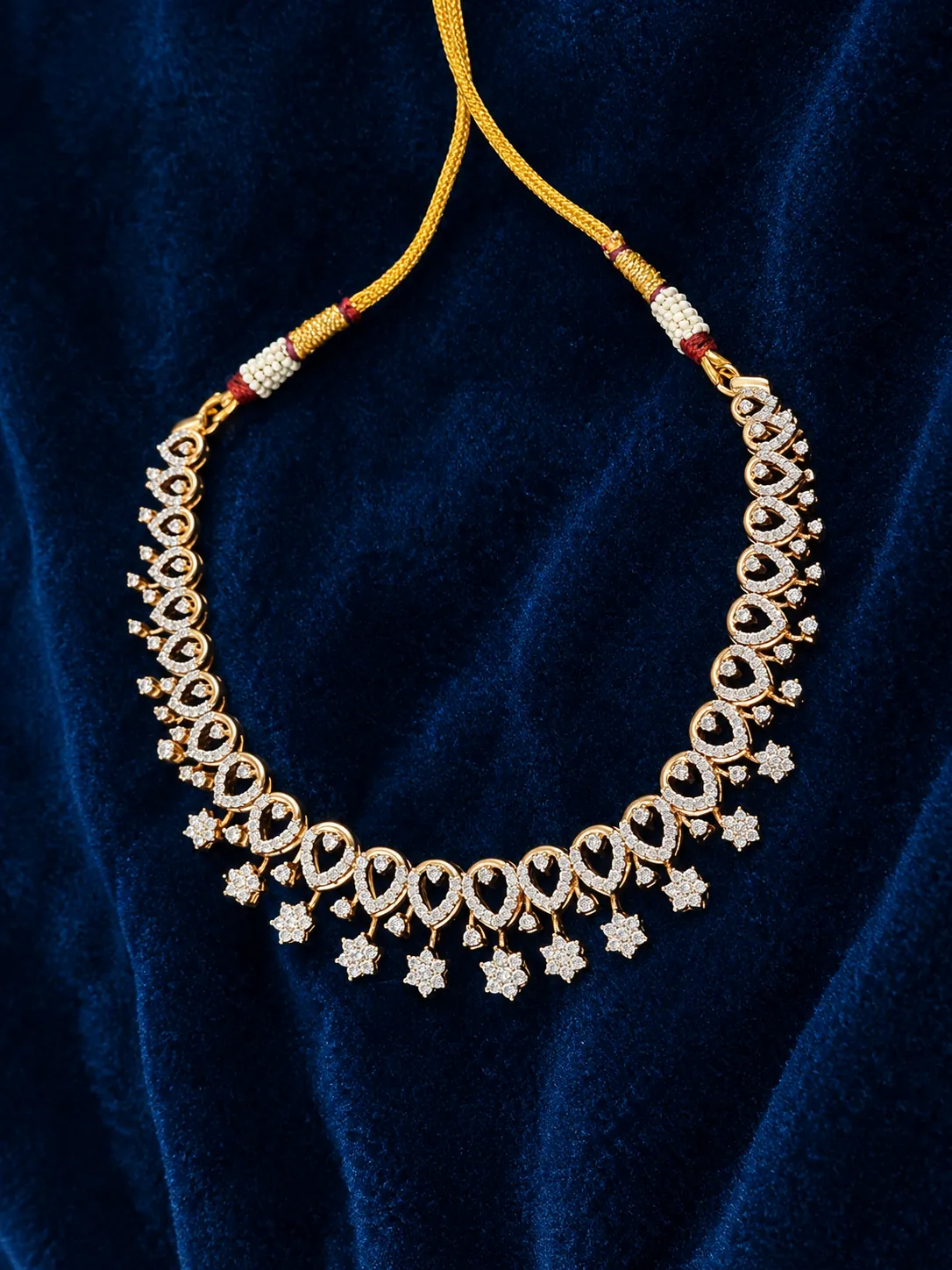
The stone is the same; the markup isn't
This is the point many buyers miss. A laboratory-grown diamond graded by IGI as D colour, VVS1 clarity is graded to the same standard whether it is sold in a flagship showroom or by a three-person studio. You can look up the report number on IGI's website either way. The difference you pay for a big brand's name is mostly the cost of the brand, not a better diamond.
So compare like with like. Ask both jewellers for the same thing: stone shape, carat, colour, clarity, gold purity and approximate gold weight. Then compare the totals.
Made to order means no inventory cost in your price
Large brands stock finished pieces in every showroom so you can buy on the spot. That stock ties up money, and some of it is eventually melted down or discounted. The cost of carrying it is spread across everything they sell.
At Ray Diamonds, nothing is made until someone asks for it. We don't hold display stock, so you aren't paying for pieces that never sold. You also get something a catalogue can't offer: a piece designed around your budget instead of a budget stretched to fit a piece.
You see the price before you commit
Big brands often price by tag and promotion, which makes it hard to see what you're actually paying for. A small jeweller can walk you through it. With us, you get an approximate price before anything is commissioned, based on the stone, gold and design you've discussed. If the number is higher than you'd like, we adjust the design with you, for example a slightly smaller centre stone or 18K instead of 22K gold, until it fits.
How to get the best value, wherever you buy
- Insist on an independent report for larger stones, and check the number on the lab's website.
- Compare grades, not just carats. A cheaper quote with lower colour or clarity isn't cheaper.
- Ask how the price splits between stone, gold and making.
- Look for the BIS hallmark and HUID on the gold.
- Be wary of permanent "sales". A discount from an inflated price is not a saving.
When a big brand might still suit you
If you need to walk into a store and leave with a piece the same afternoon, or you value a brand name for its own sake, a large chain may be the better fit. If you want the most diamond and gold for your money and a piece made for you, a small studio usually wins.
Quick answers
Is a laboratory-grown diamond from a small jeweller lower quality?
No. Quality is set by the stone's grades on an independent report and by the gold's hallmark. An IGI-graded stone is graded to the same standard whoever sells it.
Why can big brands cost more for similar jewellery?
They carry the cost of showrooms, large teams, advertising and inventory, which is recovered through making charges and margins on each piece.
Planning a piece?
Tell us the occasion and a rough budget. You'll get an approximate price and a CAD design before anything is made.