Laboratory-Grown Engagement Rings in India: Why Couples Choose Independent Jewellers
A bigger, better-graded stone for the same budget, a ring designed around your story, and people you can actually talk to. A buying guide for couples.
- A laboratory-grown diamond lets you choose a larger or better-graded centre stone for the same budget.
- Buying from an independent jeweller puts more of that budget into the ring itself rather than into a brand's overheads.
- For a ring that's meant to be personal, a design made for you beats a design made for everyone.
An engagement ring is one of the few pieces of jewellery people choose with this much care. More couples in India are now picking laboratory-grown diamonds for it, and many are also skipping the big showrooms in favour of independent jewellers. Here's why that combination makes sense, and what to check before you buy.
Why laboratory-grown for an engagement ring
A laboratory-grown diamond is the same crystal as a mined diamond, with the same hardness and sparkle (we explain the details in Laboratory-grown vs natural diamonds). What changes is the price: for the same budget you can usually choose a larger centre stone, a higher colour or clarity grade, or both. Hardness 10 also makes it well suited to a ring you'll wear every day.
One honest note: laboratory-grown diamonds have very little resale value. Choose one because you'll love wearing it, not as an investment.
Why an independent jeweller for your ring
More of your budget goes into the ring
Large brands carry the cost of showrooms, advertising and stock, and recover it through the price of every ring. A small studio has far lower overheads. Two rings with the same IGI-graded stone and the same gold weight can be priced very differently, and the difference usually isn't in the diamond. We break this down in Why a small jeweller can cost you less.
A ring designed around your story
Showroom rings are designed for thousands of buyers. With a made-to-order studio you can choose the exact stone shape, the band width, the setting height, a hidden detail under the stone, or a design that echoes a family piece. You see a CAD model of the ring before it's made, and you can change it until it feels right.
You talk to the people making it
An engagement often comes with a deadline and a secret. It helps to deal with people you can message directly, who know your order and your date, rather than a different salesperson every visit.
Choosing the centre stone
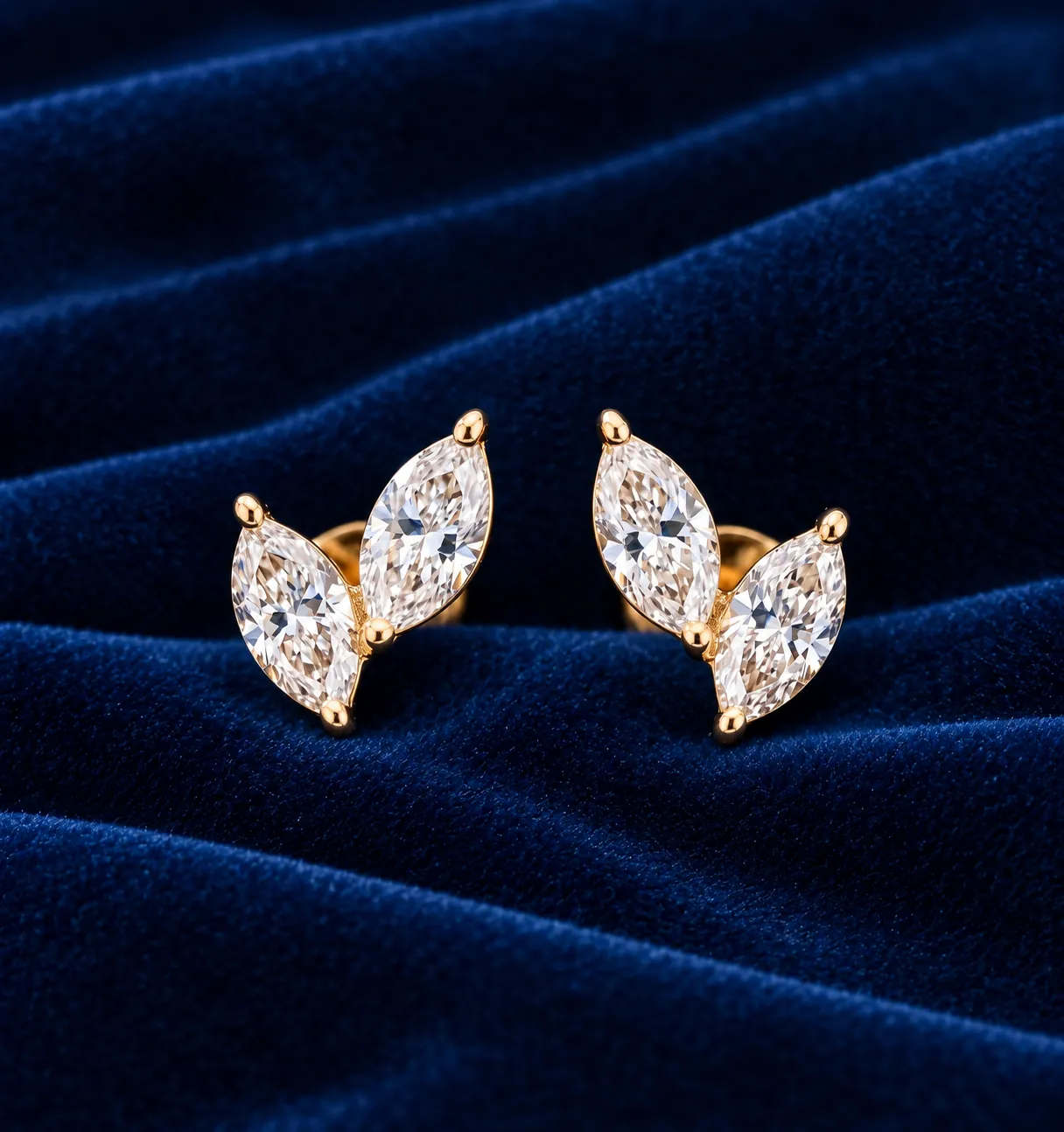
- Shape. Round is classic and shows the most sparkle. Oval, pear and marquise look larger for their weight and elongate the finger.
- Carat. Price jumps at round numbers. A 0.90–0.95 ct stone looks almost identical to 1.00 ct once set.
- Colour and clarity. Most of the stones we use are D colour with VVS1–VVS2 clarity, which look completely clean to the eye.
- Cut. The grade most worth paying for, because cut creates sparkle.
- Certificate. For a stone over 1 carat, insist on an independent report. Ours come from IGI, and you can verify the report number on IGI's website. See how to read a certificate.
Choosing the metal
18K gold is the usual choice for diamond rings: strong enough to hold prongs securely, with a rich colour. Yellow gold is traditional in India; rose and white gold suit more contemporary designs. Check for the BIS hallmark and HUID on the band.
Getting the size right without spoiling the surprise
- Borrow a ring your partner already wears on the same finger and measure its inner diameter.
- Ask a close friend or family member to help.
- If in doubt, size slightly larger. Making a band smaller is usually easier than making it bigger.
Timing
Allow a few weeks for design, CAD approval and making. If you have an engagement date or a muhurtham in mind, tell us in your first message and we'll plan around it.
Quick answers
Are laboratory-grown diamonds good for engagement rings?
Yes. They have the same hardness (10) and sparkle as mined diamonds, and let you choose a larger or better-graded stone for the same budget. Resale value is low, so buy one to wear.
What carat should I choose?
Set the total budget first. A 0.90–0.95 ct stone looks almost the same as 1.00 ct once set and can cost noticeably less.
Planning a piece?
Tell us the occasion and a rough budget. You'll get an approximate price and a CAD design before anything is made.